


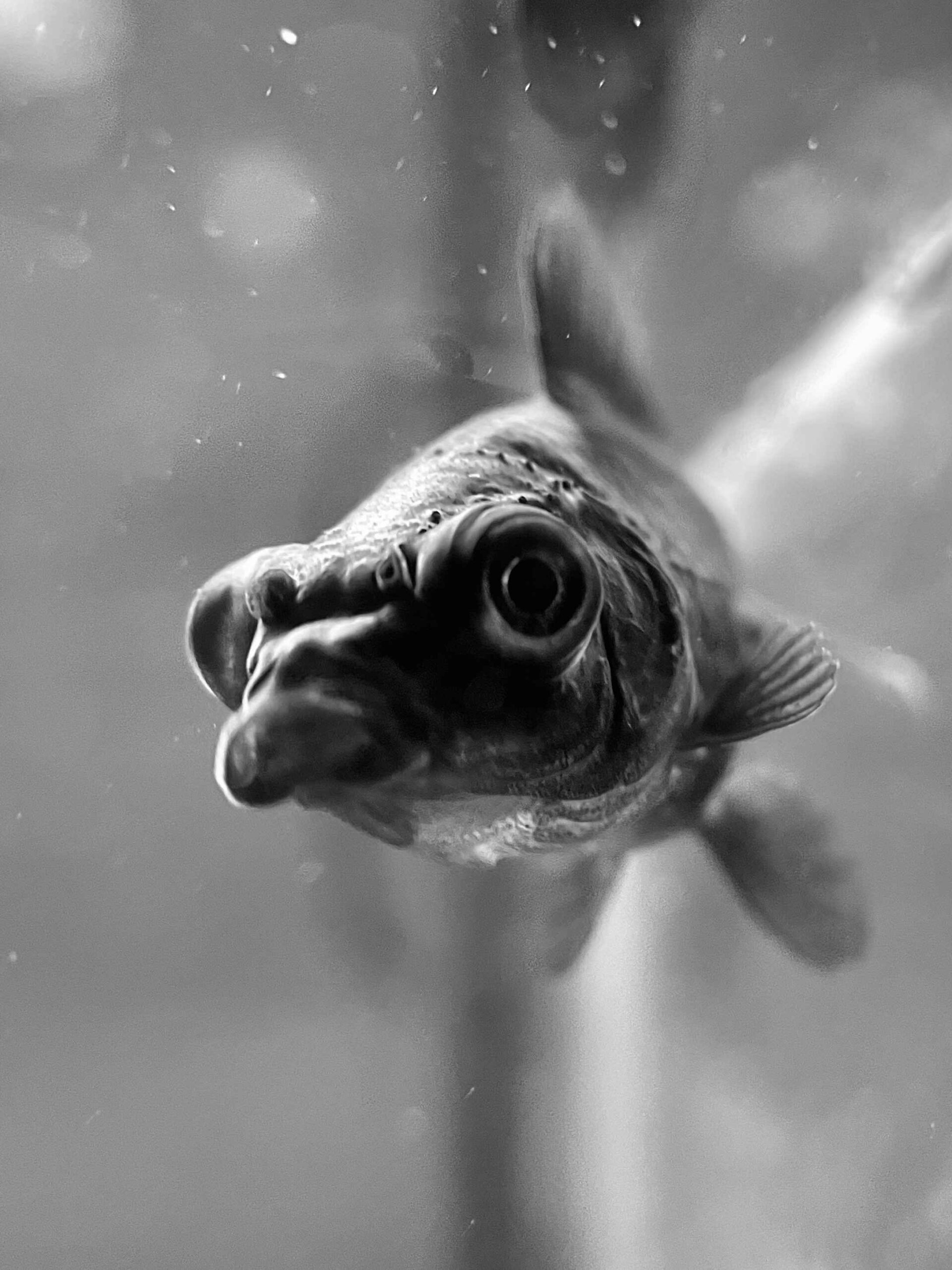
Black moor goldfish, also known as “telescope goldfish”, are beautiful, slow-moving fish with their velvety black bodies and large, bulbous eyes. Their elegance is charming, but they also require special care to remain healthy. These fish are unique and fascinating to keep as pets because they can live up to 20 years and grow up to 6 to 8” in length as adults.
Here’s a simple and easy guide to keeping black moors healthy in your aquarium.
Essential Care Tips for Black Moor Goldfish
The following tips cover everything you need to know to keep your black moor healthy, comfortable, and thriving.
1. Choosing the Right Tank
Black moors need proper space; a minimum volume of 20 gallons (approximately 75 litres) is highly recommended for one fish. For this fish, a long tank (not tall) is preferred because moors are slow swimmers and do not like strong currents. Do not place your aquarium in direct sunlight or near heaters. Changes in temperature, whether from direct sunlight or heaters, will stress the fish.
2. Water Conditions and Temperature
For moors, target a water temperature between 18 and 24°C. Keep the pH between 6.5 and 7.5 and monitor ammonia and nitrite levels regularly, as black moors produce a lot of waste. So, be sure you have a strong but gentle filter. Black moors need both mechanical filtration and biological filtration. Plan to perform weekly water changes (about 20-25% of the tank volume) to reduce waste buildup and maintain healthy water quality.
3. Tank Decoration and Substrate
Soft sand or fine, smooth gravel should be used for substrate. Rough or sharp gravel can damage their delicate fins or eyes. Try adding some live or silk plants (such as Java Fern or Anubias) for hiding places, and keep plenty of open space for the moors to swim.
4. Feeding and Diet
Provide a well-rounded diet: good choices are high-quality flakes or sinking pellets made for goldfish. Supplements are okay too, such as frozen or live proteins (e.g., bloodworms, daphnia), and just an occasional vegetable, such as blanched peas or spinach. Since black moors have poor eyesight and are very slow, it is best to feed small amounts once or twice a day, and make sure they receive their share.
5. Health Monitoring
Monitor their swimming behaviour closely, as black moors are susceptible to swim bladder disease. Be vigilant for signs of stress or illness: If they act oddly in the water, hover at the surface, or develop white spots, something is awry. Because of their bulging eyes, they are more prone to injury than a fish with normal eyes. Ensure their habitat is safe and soft. Test the water regularly and keep their environment stable: If the water quality is poor, it will cause stress, and make your fish ill.
6. Tank Mates
Black moors are docile and get along well with other slow, mild goldish types. You should avoid keeping fast or aggressive fish that could outcompete them for food or stress them. Also, be sure not to overstock the tank: Excessive stocking will increase waste and compromise water quality.
7. Maintenance Schedule
- Every Day: Provide nutrition and observe. Note any changes in behaviour or appearance.
- Every Week: Conduct water tests, replace 20-25% of the water, and lightly clean the gravel.
- Every month: Conduct a more thorough clean, rinse ornaments, lightly scrub the tank walls, and check the filter media.
Final Thoughts:
Black moor goldfish are stunning yet delicate. Providing space, clean water, soft decorations, and good food will keep them happy and healthy for a long life. With your enjoyment of the black moor goldfish, they will reward you with the beautiful way they swim and their amazing personality.
If you are travelling and you own a Black Moor, Super Pet Travel can assist with the safe import and export of pets in the UK.

