


We all want to give a home to our favourite pets, but today, we’re talking about the Capybara. You may not even have heard of it before. It’s a very uncommon pet that originates from the South American region. This blog will discuss the distinctive characteristics of Capybara, where you can get them, and their requirements for living in your house.
What is a Capybara?
Capybaras are fascinating creatures that originally come from South America’s grassy plains and wetlands. They thrive in areas close to water and love being surrounded by lots of plants and greenery. These animals are incredibly social and usually hang out in groups of around 10 to 20. But don’t be surprised if you spot much larger gatherings—sometimes up to 100 capybaras relaxing or moving around together.
Meanwhile, Capybaras are of the rodent family and are closely related to guinea pigs. They also share a distant connection with chinchillas. That might make you think they’re small, but it’s quite the opposite. That’s why we can say that these are the biggest rodents on earth. These animals have a 10-year life when caged and reduced to 4 years if they live in a wild environmental setting.
Capybara as a Pet in the UK
Are you thinking about whether you can keep a Capybara as a pet or not in the UK?
Yes, you can own a capybara in the UK. There’s no outright ban on having one as a pet. However, because of their size and the kind of care they need, you’ll have to get a special licence from your local council before you give them a place in your home.
Since these bulky animals aren’t from the UK region and demand a lot of outdoor space to stay healthy, they could become a risk to people and the environment without proper care.
Previously, Capybaras were on the list of the Dangerous Wild Animals Act, but that’s no longer the case. But still, you should be proactive, and in case you’ve applied and got rejected on your licence application, don’t try to home a Capybara. It can cause serious legal issues for you if the authorities are notified.
How Much Does a Capybara Cost & Where to Buy Them?
Are you interested in getting a Capybara and curious about its cost?
Since these are not common household pets, they are available only from passionate breeders. So, expect the high price tag too. The average price starts from £1,000 or more. But its spending doesn’t stop there. These animals need a spacious outdoor environment with at least 400 square feet per Capybara. So, if price is a concern and you’re living in a small house, these aren’t for you.
As we mentioned earlier, they’re not readily available in the market just like cats and dogs. You have to find a local breeder in your town who raises these pets in the required way. Also, you may have to pay the price they demand with minimal negotiation. That’s why we recommend that whenever you plan to buy, find them on the online platform in advance to get your desired pet.
Capybara Living Requirements
Below are some of the living requirements demanded by Capybaras.
Outdoor Space
- Open environment where they can explore and walk freely.
- For the outdoor space, the area should be at least 400 square feet.
- Your area should be fenced properly so they can’t escape easily from their territory.
- The fence should be four feet tall and be anchored underground for robust standing.
Water Access/Swimming Pool
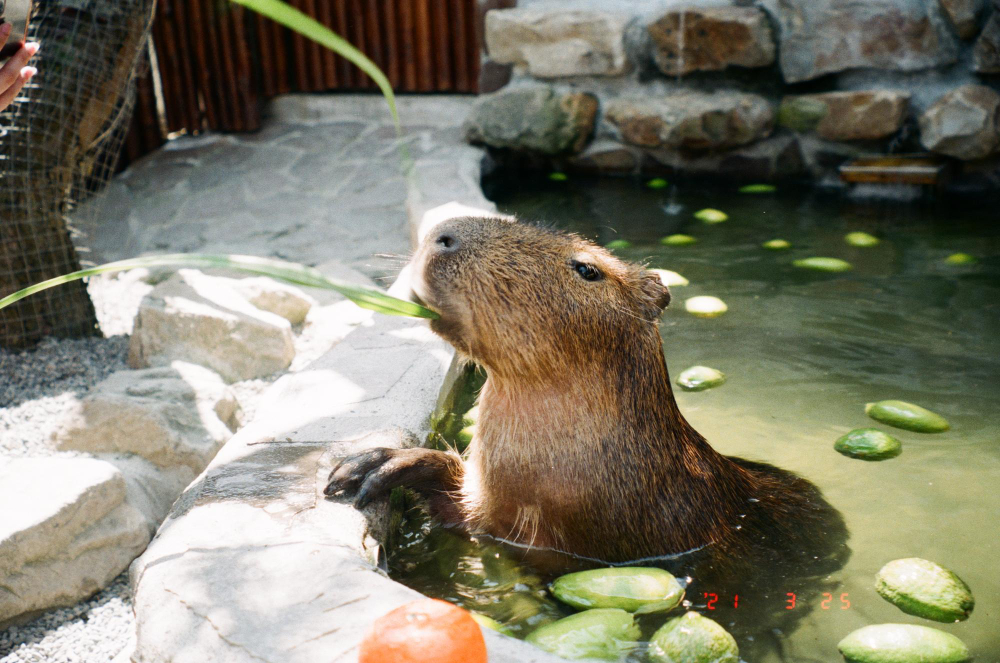
- Access to clean water for their daily hydration.
- If in the wild, the water pond must be deep so they can submerge and cool off.
- Minimum depth of two feet for younger Capybaras.
- For adults, the pool/pond size should be broader & deeper.
Shelter
- A lovely covered shed with good airflow and soft bedding like hay or straw, really a comfortable environment.
- Shelter must be insulated to block the cold winds.
- Heated lamps or pads during those chilly times are also helpful for extra cosiness.
- The outdoor area must have tree-roofed areas to offer shade on sunny days.
Food
- Fresh grass and leafy greens are their primary nutrition sources.
- Recommended hays: Timothy, orchard, and Bermuda grass.
- Moderate vegetables: kale, romaine lettuce, carrots.
- Occasional fruits: watermelon, apples.
- Vitamin C sources: bell peppers, citrus fruits.
- Fresh & clean water.
- They also consume aquatic plants, fruits, and tree bark.
Move Your Capybara with Super Pet Travel
All in all, we hope you’ve gained a lot of insights from this guide and have decided to get one. Or if you already have a Capybara and want to move it to a new hometown or send it to a friend’s home. Super Pet Travel got you covered with our reliable pet travel services. Whatever region you want to move your pet to, we offer a range of European destinations with best-in-class travel services. You can call us at 07480745167 to consult with our support staff and get answers to your dedicated queries by writing to info@superpettravel.com.
